A lasting finish starts well before the first coat of paint.
Removing old paint is only part of surface preparation. The aim is to leave a sound, clean surface that is ready for its next coating. Abrasive blasting, sanding, scraping and chemical stripping all have a place. The right choice depends on the material, its condition and what comes next.
Start with the surface
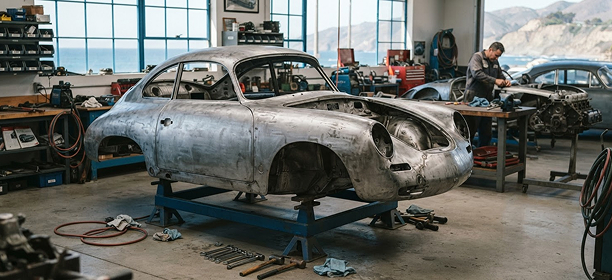
Before choosing a removal method, identify the substrate and assess the existing finish. Steel, aluminum, fiberglass and concrete do not respond in the same way. Corrosion, coating thickness, delicate edges and access can all change the preparation plan.
It also helps to know whether the whole coating needs to come off or only a small area needs attention. A broad, corroded steel frame presents a different task from a local repair on a thin body panel.
How abrasive blasting works
Abrasive blasting propels selected media against a surface to remove coatings, rust and other unwanted material. With the right media and settings, it can reach complex shapes and prepare a consistent surface profile for the specified coating.
It is not a one-setting process. Media, pressure, distance and technique must suit the substrate. Thin metal and sensitive surfaces need particular care; a test area can help establish a suitable approach before wider work begins.
A surface that looks clean is not always a surface that is ready to coat.
Cleanliness, surface profile and the coating provider's preparation requirements all matter.
Traditional removal methods
Hand scraping and mechanical sanding offer control for small repairs, edges and localized work. They can be practical when the existing coating is mostly sound, although intricate areas and heavy corrosion may take more time to address.
Chemical strippers can soften certain coatings without aggressive mechanical action. Product compatibility, residue removal and disposal need to be considered. No method is automatically dust-free, risk-free or suitable for every material.
A side-by-side comparison
| Consideration | Abrasive blasting | Traditional removal |
|---|---|---|
| Typical use | Larger areas, sensitive and complex shapes | Localized repairs and controlled detail work |
| Surface profile | Can create a profile to suit the coating specification | Depends on the tool, abrasive and process |
| Site planning | Containment, access and media recovery | Dust extraction or chemical handling and cleanup |
| Key question | Which media and settings suit the substrate? | Will this method achieve the required preparation? |
Plan for the next coating
Start with the coating provider's requirements, then work backward. The specified level of cleanliness, surface profile and application window should guide the removal method—not simply how quickly the old paint can be taken off.
Discuss masking, nearby equipment, drainage, containment and access before work starts. Existing coatings may contain hazardous materials and should be assessed where needed. After preparation, protect the surface from contamination and coordinate the handoff with your painting or coating provider.
Before you request a quote
- Photograph the whole item and close-ups of problem areas.
- Identify the material and any known coating history.
- Share the finish you want and your coating provider's requirements.
- Note the location, access and preferred project timing.
Choose the process that serves the project
Abrasive blasting is not a replacement for every traditional method, and traditional methods are not always the simplest route. A project-specific assessment helps balance surface protection, preparation quality and practical site conditions. Start with good information, then choose the process that supports the finish you want to achieve.
Coastal Blast Works
Surface preparation • Restoration • Protection
General best guidance only. Preparation methods must be assessed for the individual surface and coating system. Article content and documentation are awaiting approval.
← Back to all articles